This is a text version of the contents of the How the Bible Came to Us timeline in Bible Society’s The Bible area, at www.biblesociety.org.uk.
Dates shown are those accepted by the majority of scholars. In certain cases, a minority argue for different dates.20TH C. BC ABRAHAM HEARS GOD'S CALL
From what is now Iraq, he follows this to Canaan. Abraham's story and those of the other founders of Israel will be preserved by word of mouth before they are incorporated into the first five books of the Old Testament ("the Law" or "Pentateuch").
10TH C. BC BIBLICAL WRITING BEGINS
The earliest written parts of the Bible and sources on which it draws are thought to have been composed.
13TH C. BC GOD REVEALS THE TEN COMMANDMENTS TO MOSES AT MOUNT SINAI
10TH – 2ND C. BC THE BOOKS OF THE OLD TESTAMENT (HEBREW BIBLE) ARE COMPILED
These draw on a variety of sources that includes written and spoken narratives, court archives, personal memoirs, eye-witness accounts, genealogies, laws and poetry. Some, such as Chronicles and Kings, are probably written gradually over generations, close to the events they describe. Most are completed by the mid-5th century BC, the era when Jewish exiles had returned to Jerusalem. The Book of Daniel, usually dated to c.164 BC, is generally thought to be the latest.
4TH C. BC PENTATEUCH FINISHED
By this time if not before the final shape of the Pentateuch (Genesis to Deuteronomy) is fixed.
3RD & 2ND C. BC FIRST TRANSLATION OF THE OLD TESTAMENT
The first translation of the Old Testament into Greek is known as the Septuagint and is made by Jewish scholars at Alexandria in Egypt.
The Septuagint
Alexander the Great built a Greek-speaking city in Egypt called Alexandria. This soon became an important centre of learning and many Jews came to live there. About 200 BC, as more and more Jews outside the Holy Land began to speak Greek instead of Hebrew, learned Jewish scholars in Alexandria were commissioned to translate the Scriptures into Greek. According to tradition, there were 72 translators, 6 from each tribe, and the work came to be known as the
Septuagint (LXX), from the Greek word for seventy. The Septuagint reordered the books to include the books now known as the Apocrypha and gave the books of the Pentateuch Greek names, such as Genesis, which is Greek for “creation” and Exodus, which is Greek for “going out”. The organisation of the biblical books started by the Septuagint is now used in almost all Christian Bibles.
After the Septuagint, several other Greek translations of the Scriptures were made for the Jews, e.g. Theodotian, Aquila and Symmachus.
2ND C. BC OLD TESTAMENT “A” LIST
By 150 BC the accepted books of the Old Testament are the same as those we know today. This list ("canon") is fixed by 100 AD.
1ST C. BC DEAD SEA SCROLLS
These scrolls, which include the Old Testament, are written near Qumran between 250 BC and AD 70. They will survive as the oldest known copies in Hebrew. When they are rediscovered in 1947, they will help to confirm the accuracy of manuscript copies made 1000 years later.
1ST C. AD THE APOSTLE PAUL’S LETTERS TO CHURCHES
The Apostle Paul writes many letters of instruction and encouragement to churches. Scholars generally agree that these were the first New Testament books to be written. The letters are kept by the churches that received them, but other churches soon want copies. Before the end of the 1st century AD, they are collected together, copied and circulated along with some other New Testament letters, the Gospels and Acts, and Revelation.
MID–LATE 1ST C. AD GOSPELS AND OTHER WRITINGS
As the eye-witnesses who can recount the stories of Jesus grow old, written accounts to preserve his teaching and life are created. The Gospels draw on personal memories of Jesus' inner circle and contemporaries and on other writings that have not survived. Mark's Gospel is probably the first (AD 60s) and John's Gospel is written last (around AD 90). Acts, recounting the spread of the Church, is probably written in the 70s. Further letters to churches and individuals and the vivid Book of Revelation, which urges a persecuted Church to continue in its faith, are also completed in the second half of this century.
2ND C. AD ONWARDS THE MESSAGE SPREADS
Thousands of copies of New Testament manuscripts are made, first in Greek and then in other languages including Latin, Syriac and Egyptian as the Church spreads beyond Greek-speaking peoples. Fragments survive from the 2nd century to the 21at century. The oldest surviving complete New Testament (Codex Sinaiticus) will be from the 4th century.
2ND C. AD THE FIRST GOOD "BOOK"
The first "codex" or book form editions of the Bible are made, in preference to the more cumbersome sets of scrolls. By the close of the 2nd century the four Gospels and Book of Acts are in official use throughout the churches as trusted records and sources of Christian teaching and Paul's 13 letters are viewed in the same way. Other books take longer to gain universal acceptance though this is generally to do with their suitability for public reading. The criteria for including books is apostolicity (i.e. written by an apostle or close associate); usage (i.e. accepted by lots of churches); and orthodoxy (true to the agreed teaching of the Church).
MID-4TH C. AD: THE LATIN VULGATE
Pope Damascus commissions an official version to be used by the Church throughout the Latin-speaking Empire. Jerome, his secretary, sets about revising the existing texts of the Gospels by comparing them with the Greek. He produces his version in AD 383. In 386 he starts a translation of the Old Testament from the Greek Septuagint but abandons it to translate direct from the Hebrew, and studies the language with the help of a Jewish Rabbi. It is called the Latin “Vulgate”, meaning “common” or “belonging to the people”.
4TH C. AD CONTENTS OF THE NEW TESTAMENT FIXED
In 367 St Athanasius compiles a list of accepted Bible books identical to today’s. This settles the matter for Greek-speaking (Eastern) churches. The list is accepted by North African churches in 397 and confirmed for the Latin-speaking western churches by Papal decree in 405. The Syrian churches refuse for some centuries to be bound by these decisions.
8TH C. AD JOHN’S GOSPEL IN ANGLO-SAXON
The Venerable Bede, abbot of the monastery at Jarrow near Newcastle-on-Tyne, translated part of John’s Gospel into Anglo-Saxon.
10TH C. AD CRITICAL HEBREW TEXT
The Masoretic text of the Old Testament in Hebrew is completed by the 10th C. AD. The Masorites, over a period of more than 300 years, work to remove all ambiguities so the meaning in the Bible is clear to all who read it. They develop the most comprehensive system of punctuation ever seen, with every single word in the whole Bible punctuated to show where it sits in the sentence so the meaning is crystal clear. Thousands of Rabbis work on the text and ben Asher and ben Naphtali put it together. This text is to be the main point of reference for Bible translators and scholars in the future.
14TH C. AD TRANSLATION BY JOHN WYCLIFFE AND HIS FOLLOWERS
In England John Wycliffe and his followers translate the complete Bible from Latin into English, so that ordinary people can read and understand it. This is the first complete Bible in English. Although laboriously copied by hand, many copies are circulated: about 170 copies will survive to the 21st century.
1516 AD DESIDERIUS ERASMUS COMPILED THE FIRST GREEK NEW TESTAMENT MANUSCRIPT TO BE PRINTED
This made the New Testament widely available to translators in its original language. The manuscript runs to many editions and the third edition printed by Robert Estienne becomes known as the Textus Receptus (the received text). This will be the main text used for the King James Version of the English Bible.
1522 AD LUTHER’S NEW TESTAMENT IS PUBLISHED
Martin Luther, the most important name in German Bible translation, believes that a good Bible translation must be made directly from the original languages and in words everyone can understand. His Old Testament appears in sections over the next few years and in 1532 the whole Bible is published. It will remain the standard German Protestant Bible (with revisions from time to time).
1526 AD TYNDALE’S NEW TESTAMENT FIRST APPEARS
In England, in common with Catholic Europe, Scriptures are only permitted in Latin. Tyndale's English translation has to be smuggled in by sympathetic merchants in bales of wool and wine casks with false bottoms. Tyndale starts translating the Old Testament, but only manages to finish the Pentateuch and Jonah before he is betrayed, arrested, tried, and finally burned for heresy at Vilvorde in Belgium in 1536. His New Testament revision (1534) is used in many of the later English translations.
1535 AD COVERDALE PRODUCES THE FIRST COMPLETE PRINTED BIBLE IN ENGLISH
The New Testament and Pentateuch in Coverdale’s Bible are based on Tyndale’s work and the rest is translated from Latin and German. The Church of England has been established since Henry VIII broke with Rome (1534). Now, in 1539, he commands that a Bible revised by Coverdale should be available in all the country's churches.
1569 AD CASSIODORO DE REINA’S SPANISH TRANSLATION OF THE FULL BIBLE IS PUBLISHED IN BASEL, SWITZERLAND
Although Bible portions already exist in Spanish, the Spanish Inquisition's decision (1551) to prohibit vernacular Bibles means they cannot be widely circulated. De Reina completes his work outside of Spain, in England, the Netherlands and Germany.
1580–1602 AD REVISION OF DE REINA’S TRANSLATION
Cipriano de Valera begins revising de Reina’s translation and by 1596 he finishes the New Testament. In 1602 the whole Bible is published in Amsterdam. The Reina-Valera version will become the standard Spanish Protestant Bible.
1604 AD THE KING JAMES VERSION
A new revision of the English Bible is proposed, and welcomed by King James I. Fifty translators are appointed to work in six groups, each responsible for a section of the text. Their work is submitted to a committee for final editing and published in 1611. Because James I has commanded it, it becomes known as the King James or Authorised Version. Although it will go through many revisions, for more than 300 years it will remain the most widely read book in the English language.
1661 AD THE FIRST BIBLE PRODUCED IN THE AMERICAS
John Eliot has sailed with the Puritans to the newly colonised East Coast of America to find religious freedom and worked for over 50 years with the Massachusetts indigenous Americans. His New Testament translation is now published, followed in 1663 by the whole Bible.
18TH C. AD GROWTH OF MISSIONARY TRANSLATION WORK
William Carey teaches himself Latin, Greek, Hebrew, French and Dutch and sails from England to Bengal in India in 1793. In 30 years, William Carey and his colleagues translate and print in 45 languages and dialects – in 35 of these they are the first people to print Scriptures. Carey himself learns Sanskrit (the old “classical” Indian language), Bengali, Marathi, and even some Sinhalese – spoken in what is now Sri Lanka. He translates, or helps to translate, into over 20
languages, of which his Bengali Bible will eventually become the most famous.
Joshua Marshman is particularly interested in Chinese and with the help of John Lassar, an Armenian born in Macao, in China, he begins translating the Bible into Chinese. Matthew’s Gospel is published in 1810 and the whole Bible finished by 1822.
Robert Moffat is one of the first missionaries to South Africa. Most of his work is in what is now Botswana and his most famous achievement is the translation of the Bible into Setswana.
1804 AD THE FOUNDING OF THE BRITISH AND FOREIGN BIBLE SOCIETY
At a time of expanding trade and missionary activity and faster book production made possible by the Industrial Revolution, the British and Foreign Bible Society is formed to encourage the wider circulation of the Scriptures worldwide.
20TH C. AD SCRIPTURE TRANSLATION AND REVISION CONTINUES
The discovery of previously unknown manuscripts and greater understanding of the biblical text leads to an upsurge of new Bible translations. By 1900, more than 500 languages have at least one book of the Bible.
1947 AD DISCOVERY OF THE DEAD SEA SCROLLS
The original handwritten manuscripts of the Bible no longer exist, but what does remain are carefully hand-written copies. Hebrew scrolls, including one of the entire Book of Isaiah, are discovered in 1947 in a cave near the Dead Sea. These are 1,000 years older than any previously known Hebrew manuscripts of the Bible.
1976 AD THE GOOD NEWS BIBLE IS PUBLISHED IN ENGLISH
The Good News Bible is a translation which aims to give readers maximum understanding of the content of the original Hebrew and Greek texts, by presenting them in everyday English. It quickly becomes the most widely used version in England.
21ST C. AD THE BIBLE, IN COMPLETE OR PARTIAL FORM, IS NOW AVAILABLE IN 2,261 LANGUAGES (UNITED BIBLE SOCIETIES SCRIPTURE LANGUAGE REPORT 2000)


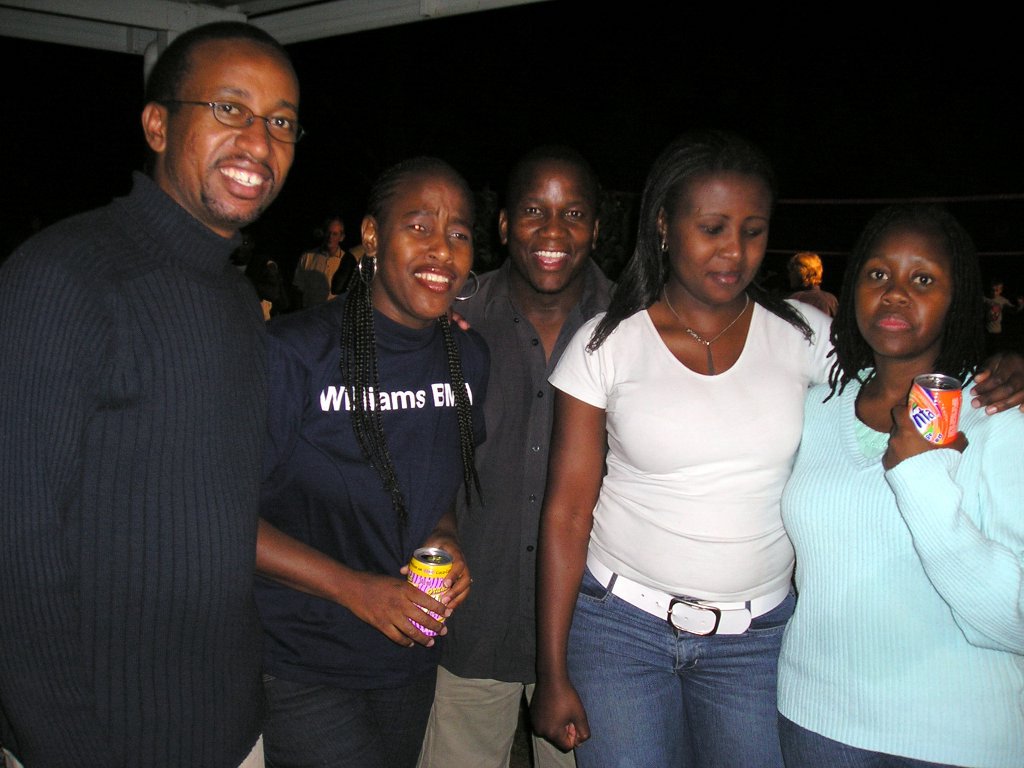
 On October 28th, 2005, 14 friends from Botswana came to visit me in Johannesburg. It was a fantastic time which we had been looking forward to for weeks and days. The guys who were there are: Moshie Ratsebe, Tebogo Pinaemang, Thebe Tumagole, Molemosi Crax Nkarabang, Laona Segaetsho, Thato Kubu & Sean (who is only but a small boy). The ladies who were there were Esther Garechaba, Kealeboga Dambuza, K. Kelesitse, Marea Marakgakgoro, Neo Marakakgoro, Tshepiso, Gaone, Kenanao Pinaemang. We were even joined by Legakwa Marakakgoro & her room mate Rachel, both of whom are undergraduates at Wits University, in central Johannesburg. Above is a group picture with most guys who came Saturday night for the braai.
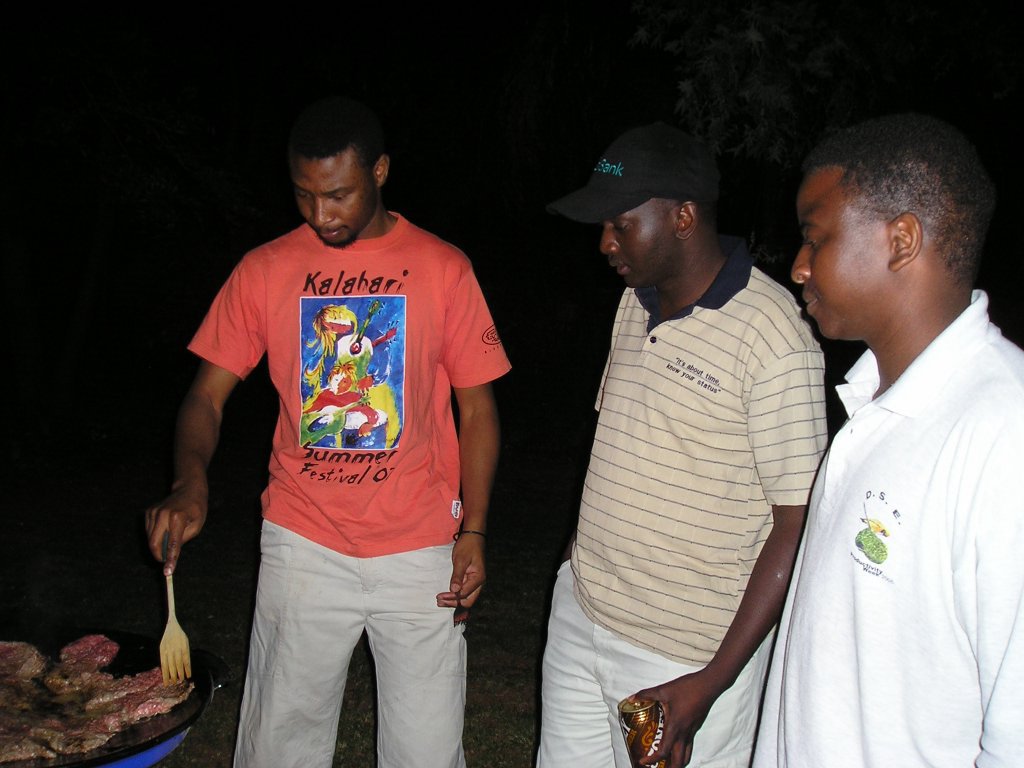
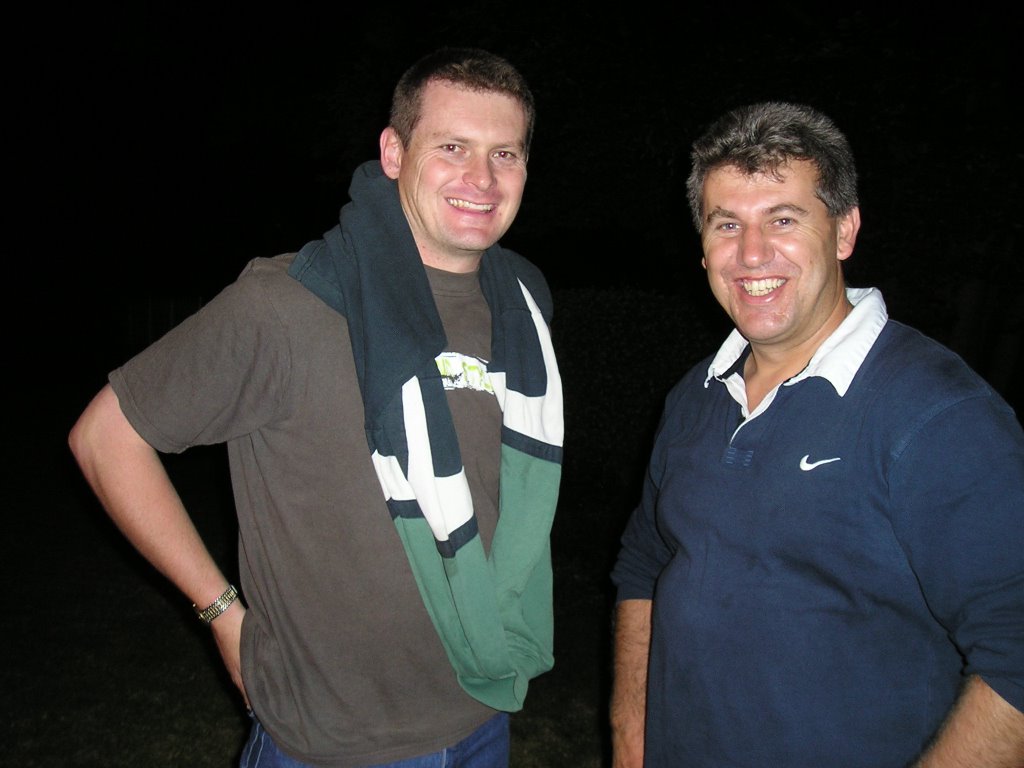 At the braai during the Batswana friend's vist. Greg Tait and Peter Brooks were there! Peter Brooks and his family were on their way from Brighton, UK where they had been for the past 18 years or so to Australia. Peter Brooks has been the senior pastor at Church of Christ the King (CCK) for the past 8 years or so. God has called him to Australia from a church of about a thousand to lead a church of about fifty and to oversee apostolic work in the AutraliAsia region. He has been my pastor for the past two years in Brighton & it was such a joy to meet him yet again in South Africa.